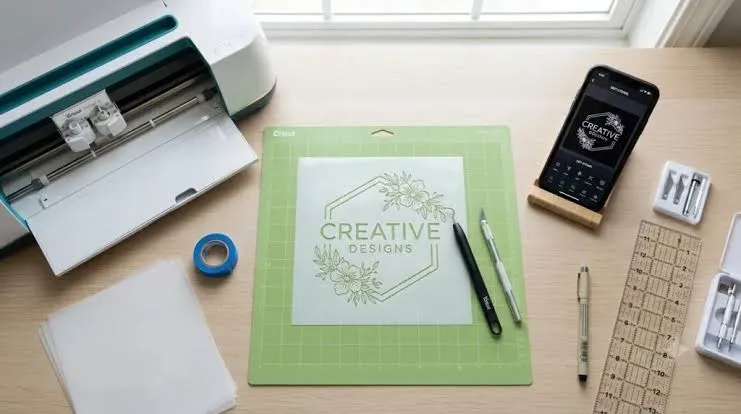
Choosing a stencil material may appear simple until you start comparing thickness, flexibility, adhesive strength, cutting difficulty, and reusability. A material that works well for a painted wooden sign may fail on fabric. A strong plastic sheet may last for years but be too difficult to cut by hand. A thin adhesive film may produce sharp edges but only survive one application.
The best material depends on what you are creating, how you plan to cut the design, and how many times you need to use it.
This guide compares the most useful materials for handmade, machine-cut, adhesive, reusable, and professional stencils. It is part of our Stencil Making Tools & Techniques Complete Guide, where you can learn about stencil design, cutting tools, painting methods, and material preparation.
What Is the Best Material for Making Stencils?
For most reusable craft stencils, 4-mil to 7-mil Mylar or another suitable polyester stencil film is the best overall choice. It is flexible, washable, reasonably durable, and transparent enough to help with positioning.
However, no single material is best for every job.
Use:
- Mylar for reusable craft, wall, sign, and decorative stencils.
- Stencil vinyl for sharp, single-use designs on smooth or slightly curved surfaces.
- Acetate for affordable, transparent, light-duty reusable stencils.
- Cardstock for low-cost practice projects and one-time use.
- Freezer paper for fabric stenciling.
- Plastic poster board for larger and stronger reusable designs.
- Oilboard for lettering, marking, and traditional sign work.
- Thick plastic or metal for industrial marking and repeated heavy use.
Mylar and other polyester films are commonly recommended for reusable stencils because they resist paint absorption better than paper products. Cardstock and paperboard can absorb moisture, become uneven, and lose clean edges after repeated painting.
A good stencil material must do more than survive the cutting process. It should match the shape of the surface, stay stable during painting, and release without damaging the finished design.
Before selecting a material, consider the following qualities.
Flexibility
Flexible materials work better on curved objects, furniture, containers, glasses, and uneven craft surfaces. However, a material that is too soft may move while paint is being applied.
Thin Mylar, acetate, and stencil vinyl can bend around gentle curves. Thick plastic sheets are more suitable for flat surfaces.
Durability
Durability matters when you plan to use the same design several times.
A paper stencil may work for one or two careful applications. A polyester stencil can often be cleaned and reused many times when handled correctly. Heavy plastic is more suitable for workshop, floor-marking, or commercial projects.
Paint Resistance
Paper-based materials can absorb watery paint, ink, or cleaning liquid. This may cause the material to curl, swell, soften, or tear.
Plastic-based materials usually resist moisture better, making them more suitable for repeat use. The exact lifespan still depends on the paint, solvent, cleaning method, storage conditions, and thickness.
Cutting Difficulty
Thin materials are easier to cut, but they may also tear or bend more easily. Thick materials last longer but require greater cutting force.
Consider the tool you will use:
- Craft knife
- Precision knife
- Scissors
- Cricut machine
- Silhouette machine
- Stencil cutter
- Laser cutter
- Professional cutting service
Never assume that one machine setting will work for every brand. Thickness, coating, blade condition, mat grip, and machine model can all affect the cut.
Transparency
Clear or semi-transparent stencil sheets make alignment easier. You can see the surface, registration marks, and previous pattern sections through the stencil.
This is especially useful for:
- Repeating wall patterns
- Layered stencils
- Borders
- Furniture designs
- Multicolor artwork
- Connected signs
Adhesive Support
An adhesive stencil stays closer to the surface and can reduce movement and paint bleeding. The disadvantage is that most adhesive materials are designed for limited or single use.
Non-adhesive reusable stencils may require painter’s tape or a repositionable stencil adhesive.
Best Stencil Materials Compared
| Material | Best use | Reusable? | Cutting difficulty | Surface type |
| Mylar or polyester film | General reusable stencils | Yes | Easy to moderate | Flat and gently curved |
| Stencil vinyl | Sharp single-use designs | Usually no | Easy with a cutting machine | Smooth and curved |
| Acetate | Budget transparent stencils | Limited reuse | Easy to moderate | Mostly flat |
| Cardstock | Practice and one-time crafts | Usually no | Very easy | Flat |
| Freezer paper | Fabric painting | No | Easy | Fabric |
| Plastic poster board | Large durable designs | Yes | Moderate | Flat |
| Oilboard | Letters, signs, and marking | Limited reuse | Moderate | Flat |
| Thick plastic | Floors and industrial marking | Yes | Difficult | Flat |
| Metal | Professional repeated marking | Yes | Specialist cutting required | Flat |
1. Mylar: Best Overall Material for Reusable Stencils
Mylar is a trade name often used when discussing polyester film. In stencil making, the term is commonly used for clear or translucent polyester stencil sheets sold in different thicknesses.
It is popular because it offers a useful balance of:
- Flexibility
- Strength
- Water resistance
- Visibility
- Detail retention
- Reusability
- Reasonable cutting difficulty
Mylar does not absorb paint like ordinary paper. It can usually be wiped or washed after use, depending on the paint and cleaning instructions supplied by the material manufacturer.
Best Mylar Thickness for Stencils
Stencil sheet thickness is often measured in mils. One mil equals one-thousandth of an inch, not one millimetre.
Common choices include:
- 3-mil to 4-mil: Suitable for detailed designs, hand cutting, airbrushing, and light craft use.
- 5-mil to 7-mil: A strong general-purpose range for reusable stencils.
- 10-mil: Better for large, simple designs that need extra strength.
- 14-mil or thicker: Mainly useful for heavy-duty marking, larger openings, and professional applications.
A thinner sheet bends more easily and normally handles fine details better. A thicker sheet is stronger, but it can create raised edges and may be harder to cut.
Commercial stencil suppliers commonly separate lighter polyester materials for detailed work from thicker materials intended for contractors, floors, signs, and repeated marking.
Mylar is a strong choice for:
- Wall painting
- Furniture decoration
- Wooden signs
- Repeating patterns
- Fabric painting
- Airbrushing
- Classroom craft sets
- Seasonal decorations
- Cake decorating, when using a product specifically identified as food-contact safe
- Reusable business or packaging marks
Do not assume that every clear plastic sheet is safe for food. Use only materials specifically sold or certified for the intended food-contact application.
2. Stencil Vinyl: Best for Sharp Single-Use Designs
Stencil vinyl is an adhesive-backed film. It attaches directly to the project surface and helps hold the cut edges in place.
Because it sits close to the surface, it can produce clean details on:
- Wood
- Glass
- Metal
- Signs
- Tumblers
- Smooth walls
- Painted furniture
- Plastic containers
Adhesive vinyl is especially useful for letters and designs containing narrow sections that might lift when using a loose plastic stencil.
Advantages of Stencil Vinyl
- Holds small design details in position
- Works well on gently curved surfaces
- Helps limit stencil movement
- Creates a close seal around cut edges
- Can be cut with Cricut and Silhouette machines
- Supports the use of transfer tape for complex designs
Disadvantages of Stencil Vinyl
- Usually intended for one project.
- Requires weeding
- May require transfer tape
- Can stretch during application
- May pull weak paint from poorly prepared surfaces
- Can be difficult to reposition after firm contact
- Produces more waste than a washable reusable stencil
Vinyl usually offers a closer seal than a loose sheet stencil, while reusable Mylar designs require bridges to hold enclosed areas in position. Hessian vinyl: test it on a hidden part of the surface. Fresh paint, chalk paint, poorly bonded coatings, and delicate finishes may lift when the stencil is removed.
3. Acetate: Best Budget Material for Transparent Stencils
Acetate sheets are clear, smooth, and easy to find. They are sometimes sold for craft projects, presentations, packaging, art, or model work.
Acetate can be useful when you need:
- A transparent stencil
- A low-cost plastic option
- A simple reusable design
- Easy pattern alignment
- A sheet that is thinner than heavy stencil plastic
Is Acetate the Same as Mylar?
No. The names are sometimes used loosely by sellers, but acetate and polyester film are different materials.
Both may appear clear and flexible. Their strength, tear resistance, chemical resistance, and cutting behaviour can differ. Always check the product description rather than buying a sheet based only on its appearance.
Limitations of Acetate Stencils
Thin acetate can crack, crease, or tear around narrow bridges. Some sheets may also react poorly to strong solvents or aggressive cleaning.
Use acetate for light-duty projects and test the paint and cleaning method on a spare piece before making a detailed stencil.
4. Cardstock: Best for Beginners and One-Time Projects
Cardstock is one of the easiest stencil materials to buy and cut. It is a practical choice when you are testing a design before cutting more expensive plastic.
It works well for:
- Children’s crafts
- Classroom activities
- Simple greeting cards
- Scrapbooking
- Temporary decorations
- Dry media
- One-time paint projects
- Testing stencil size and spacing
Why Cardstock Is Useful
- Low cost
- Easy to cut by hand
- Easy to cut with a craft machine
- Available in many sizes
- Suitable for design testing
- Stiffer than standard printer paper
Why Cardstock Is Not Ideal for Reusable Stencils
Cardstock absorbs moisture. Wet paint can soften its edges, and repeated cleaning is normally not possible. Fine bridges may tear when the stencil is lifted.
You can improve its short-term strength by applying clear tape or laminating the sheet before cutting. Laminated sheets have been used successfully as washable, transparent stencil material, although cutting quality depends on the laminate thickness and tool. r: Best for Fabric Stenciling
Freezer paper is a useful choice for one-time fabric designs. It has a paper side and a coated side. The coated surface can temporarily attach to some fabrics when pressed correctly with an iron.
This temporary bond helps reduce movement around the design.
Freezer paper is useful for:
- T-shirts
- Tote bags
- Pillow covers
- Fabric banners
- Children’s clothing
- Small textile projects
Basic Freezer Paper Stenciling Process
- Create or print the stencil design.
- Cut out the painted areas.
- Place the coated side against the fabric.
- Follow the paper manufacturer’s heat instructions.
- Put a protective layer behind the fabric.
- Apply fabric paint in thin layers.
- Allow the paint to set as directed.
- Peel away the paper carefully.
- Heat-set the paint when required by the paint manufacturer.
Freezer paper is not a washable reusable stencil material. Its value comes from temporary surface contact and easy removal.
6. Plastic Poster Board: Best for Large Reusable Designs
Plastic poster board is thicker and stronger than thin acetate. It is useful for larger letters, signs, wall graphics, floor patterns, and basic shapes.
It may work well when a thin film feels too flexible.
Advantages
- Stronger than paper poster board
- Resists water
- Suitable for repeated use
- Useful for larger shapes
- Less likely to fold during storage
Disadvantages
- Harder to cut
- Fine details may be difficult to weed
- May require several machine passes
- Can be too rigid for curved surfaces
- Thick edges may increase paint buildup.
Craft tests comparing stencil materials have found that plastic poster board can produce sharp results, although cutting and weeding may require more effort than thinner film. St for Traditional Lettering and Marking
Oilboard is a treated paperboard traditionally used for lettering, shipping marks, signs, warehouses, and industrial identification.
It is stronger and more moisture-resistant than ordinary cardboard, but it is not identical to waterproof plastic.
Oilboard is suitable for:
- Large letters
- Shipping symbols
- Storage labels
- Workshop identification
- Repeated spray markings
- Traditional sign work
It is often a good middle option when cardstock is too weak, but plastic is not required.
8. Thick Plastic and Metal: Best for Heavy-Duty Stencils
Thick plastic sheets are designed for demanding projects such as:
- Car parks
- Warehouse floors
- Roads
- Factory equipment
- Shipping containers
- Construction areas
- Repeated safety markings
These materials may survive hundreds of uses when the design, handling, and cleaning process are suitable.
Metal stencils are used when heat resistance, strength, or very high repeatability is required. However, metal is expensive and normally requires laser cutting, machining, chemical etching, or another professional process.
These options are unnecessary for most home craft projects.
How to Choose the Right Stencil Material Step by Step
Step 1: Decide How Many Times You Will Use the Stencil
For one use, choose:
- Cardstock
- Paper
- Freezer paper
- Stencil vinyl
For repeat use, choose:
- Mylar
- Polyester film
- Acetate
- Plastic poster board
- Oilboard
- Heavy plastic
Step 2: Check the Surface Shape
For flat surfaces, most materials will work.
For curved or uneven surfaces, choose a thin and flexible material, such as:
- Stencil vinyl
- Thin Mylar
- Flexible stencil film
- Thin acetate
Do not force thick plastic around a tight curve. It may lift at the edges and allow paint to enter underneath.
Step 3: Match the Material to the Paint
Consider whether you are using:
- Acrylic paint
- Fabric paint
- Chalk paint
- Latex wall paint
- Spray paint
- Ink
- Airbrush paint
- Glass paint
- Etching cream
Water-based paint can weaken paper stencils. Solvent-based paint may damage some plastics or adhesives. Always test an unfamiliar combination on scrap material.
Step 4: Check Your Cutting Method
For hand cutting, thin Mylar, acetate, cardstock, and freezer paper are easier to manage.
For a Cricut or Silhouette machine, you may use:
- Stencil film
- Stencil vinyl
- Cardstock
- Acetate
- Compatible thin polyester sheets
Cricut’s official instructions list flexible stencil film options for different machine families and explain that some materials require a cutting mat.
Fine designs need thin material and strong bridges.
Large, simple designs can use thicker sheets.
Before cutting, check:
- Letter centres
- Narrow bridges
- Small gaps
- Sharp corners
- Isolated shapes
- Repeating alignment marks
- Minimum cutting width
A durable material cannot fix a poorly constructed stencil design.
Step 6: Perform a Small Test Cut
Do not cut the entire design immediately.
Create a test containing:
- A circle
- A sharp corner
- A narrow line
- A small letter
- A bridge
- A detailed shape
Check whether the material cuts cleanly without tearing, dragging, or lifting from the mat.
Can a Cricut Cut Mylar Stencil Sheets?
Many Cricut users cut thin stencil films and compatible plastic sheets, but success depends on:
- Machine model
- Sheet thickness
- Blade type
- Blade condition
- Cutting mat
- Material brand
- Design complexity
- Pressure
- Number of passes
Cricut publishes instructions for its own stencil film products, but third-party Mylar may need a custom material setting and a test cut. Do not treat a setting from another user as a guaranteed setting for your machine.
Use a clean mat and make sure the full sheet is attached securely. If the material lifts during cutting, the blade may drag it across the design.
Which Stencil Material Produces the Sharpest Edges?
Adhesive stencil vinyl often produces the sharpest edges on smooth surfaces because it stays close to the project.
However, material choice is only one part of the result.
Paint bleeding is also affected by:
- Too much paint
- A wet brush or roller
- Poor surface preparation
- An uneven wall or wood grain
- Loose stencil edges
- Thick paint buildup
- Incorrect removal direction
- Moving the stencil before the paint settles
For non-adhesive stencils, apply paint in light layers. A nearly dry stencil brush or foam roller often provides better control than a heavily loaded brush.
Common Mistakes When Choosing Stencil Material
Choosing the Thickest Sheet for Every Project
Thicker does not always mean better. Thick sheets can make fine cutting harder and may create raised edges that collect paint.
Buying Clear Plastic Without Checking Its Type
Two transparent sheets may behave differently. Check the material name, thickness, temperature limits, solvent resistance, and intended use.
Using Cardstock for a Large Wet-Paint Project
Cardstock may soften and curl before a large design is complete. Use it for testing or limited applications.
Expecting Vinyl to Be Reusable
Adhesive stencil vinyl may stretch, tear, or lose its adhesive after removal. It is normally selected for precision rather than long-term reuse.
Skipping the Test Cut
A test cut can prevent the loss of an entire sheet. It also shows whether your bridges and small details are strong enough.
Using the Wrong Material on Fresh Paint
Adhesive film can lift paint that has not fully cured. Dry paint and cured paint are not always the same. Follow the paint manufacturer’s recommended curing period.
Cleaning the Stencil Too Aggressively
Scraping dried paint from a thin stencil can damage bridges. Clean the material according to its manufacturer’s instructions and avoid harsh chemicals unless compatibility has been confirmed.
Real-World Material Recommendations
Wooden Sign
Use stencil vinyl for one sharp design or 5-mil to 7-mil Mylar for repeated signs.
Repeating Wall Pattern
Use transparent Mylar with alignment marks. A reusable sheet is more practical than cutting new vinyl for every repeat.
T-Shirt
Use freezer paper for a one-time design or a flexible reusable film designed for fabric painting.
Glass Jar
Use adhesive stencil vinyl because it can follow the curve more closely.
Classroom Craft
Use cardstock for low-cost individual projects or Mylar when many students will share one stencil.
Warehouse Floor
Use thick contractor-grade plastic designed for marking paint and repeated heavy handling.
Detailed Airbrush Design
Use thin Mylar, acetate, or an appropriate masking film. Thin material keeps the stencil edge closer to the surface.
Frequently Asked Questions
What is the best reusable stencil material?
For most home and craft projects, 5-mil to 7-mil Mylar or polyester stencil film offers a strong balance of durability, flexibility, detail, and easy cleaning.
What is the cheapest material for stencils?
Printer paper and cardstock are the cheapest common choices. Cardstock is stronger and easier to control, but neither is ideal for repeated wet-paint use.
Is 10-mil Mylar too thick?
It is not too thick for every project, but it can be difficult to cut by hand and can be hard for lightweight craft machines to handle. It works better for large shapes, signs, and durable flat stencils.
Can I use laminated paper as a stencil?
Yes. Laminated paper can become water-resistant and reusable for light craft projects. Test the laminate thickness before cutting it with a machine.
Is stencil vinyl better than Mylar?
Stencil vinyl is better for a close seal and sharp single-use work. Mylar is better when you need to wash and reuse the same design.
What material should beginners use?
Beginners can test designs with cardstock before moving to 4-mil or 5-mil Mylar. This reduces waste while they practise cutting, bridging, positioning, and paint application.
Learn More and References
- Wikipedia: Stencil A useful overview of stencil definitions, uses, and the basic principle of applying pigment through openings in a sheet.
- Cricut Help: Smart Stencil and Stencil Film Instructions. Official compatibility, loading, transfer, and cutting guidance for Cricut stencil materials.
- Adobe Illustrator: Official information about creating scalable vector artwork, patterns, letters, and cutting-ready designs.
Conclusion
The best stencil material is the one that fits your surface, design, cutting tool, paint, and expected number of uses.
Choose Mylar for a dependable reusable stencil, stencil vinyl for sharp one-time designs, acetate for transparent low-cost templates, cardstock for testing, and freezer paper for fabric. For large or heavy-duty work, move to plastic poster board, oilboard, or contractor-grade plastic.
Start with a small test design before using an entire sheet. A five-minute test can reveal cutting, lifting, paint, and alignment problems before they affect the final project.
When your material has been selected, follow our Cricut Stencil Cutting Guide to prepare the artwork, choose a blade, test cuts, and improve cutting accuracy.
3 thoughts on “Best Materials for Stencils: How to Choose the Right Material for Every Project”