Stencil Brush vs Foam Roller: Which Is Better?
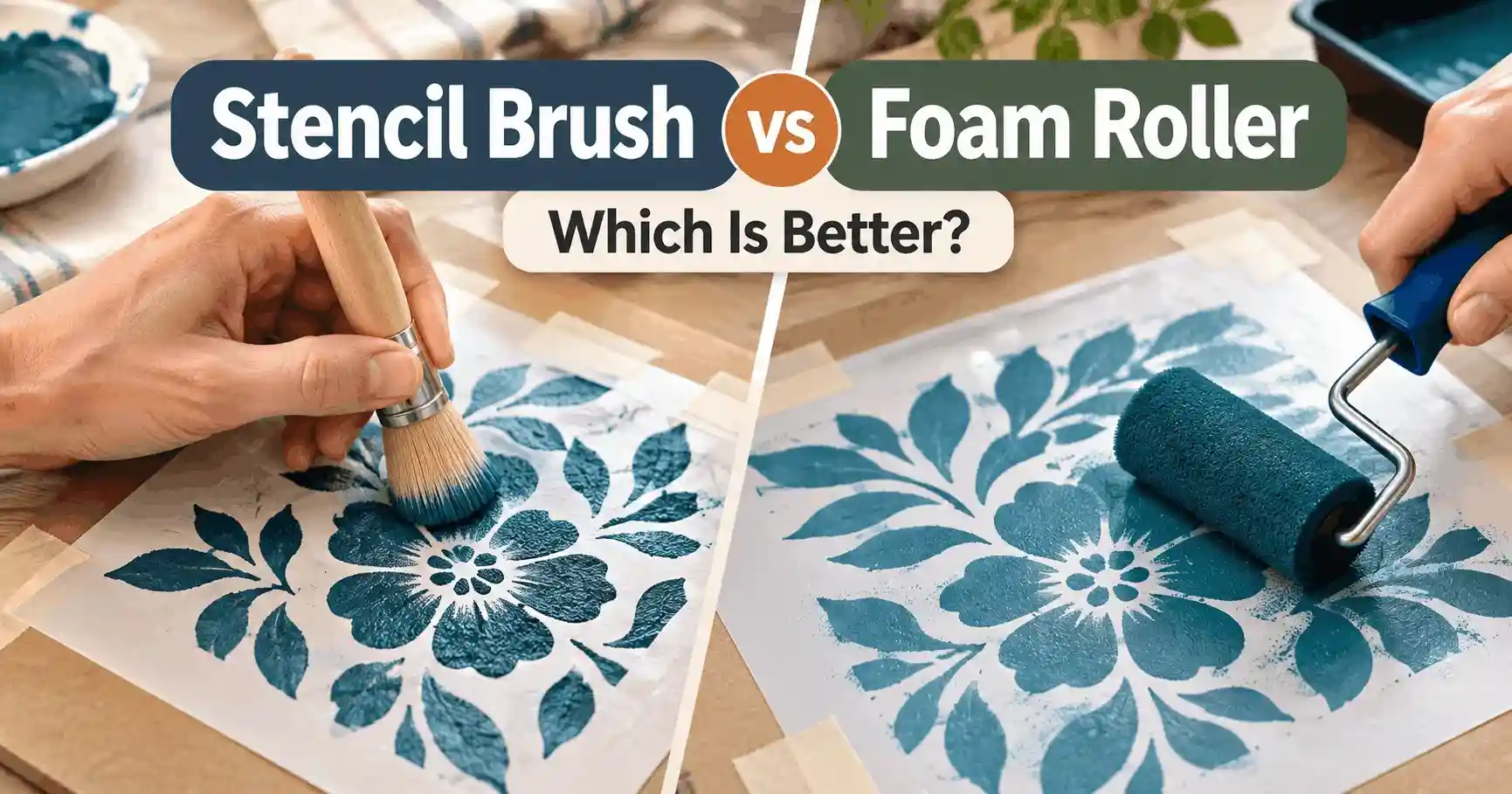
Compare stencil brushes and foam rollers for detail, walls, furniture, paint control, cleaner edges, speed, and bleed prevention on stencils.
Stencil Usage & Troubleshooting is the practical hub for applying stencils cleanly on different surfaces and fixing the problems that usually cause blurry edges, paint bleed, lifting, weak cuts, or damaged stencil material. The guides here cover fabric, canvas, walls, leather, cork, glass, metal, reusable Mylar, Cricut-cut stencils, and other everyday stencil projects.
If you are starting from an image or design, begin with our free stencil maker. For application problems, see the guides on fixing paint bleed under a stencil and stenciling fabric without bleeding. If the problem happens before painting, our Cricut stencil cutting fixes explain common blade, material, pressure, and design issues.
Surface choice matters too. Different materials need different preparation, paint loading, adhesive pressure, and removal technique. Use the stencil materials guide when choosing Mylar, vinyl, paper, acetate, or another stencil material. After a project, follow the reusable Mylar cleaning and storage guide to help preserve edges and keep future applications consistent.
Browse the latest guides below by the surface or problem you are working on. Each article focuses on practical preparation, controlled application, realistic troubleshooting, and steps that help produce cleaner stencil results.
Compare stencil brushes and foam rollers for detail, walls, furniture, paint control, cleaner edges, speed, and bleed prevention on stencils.
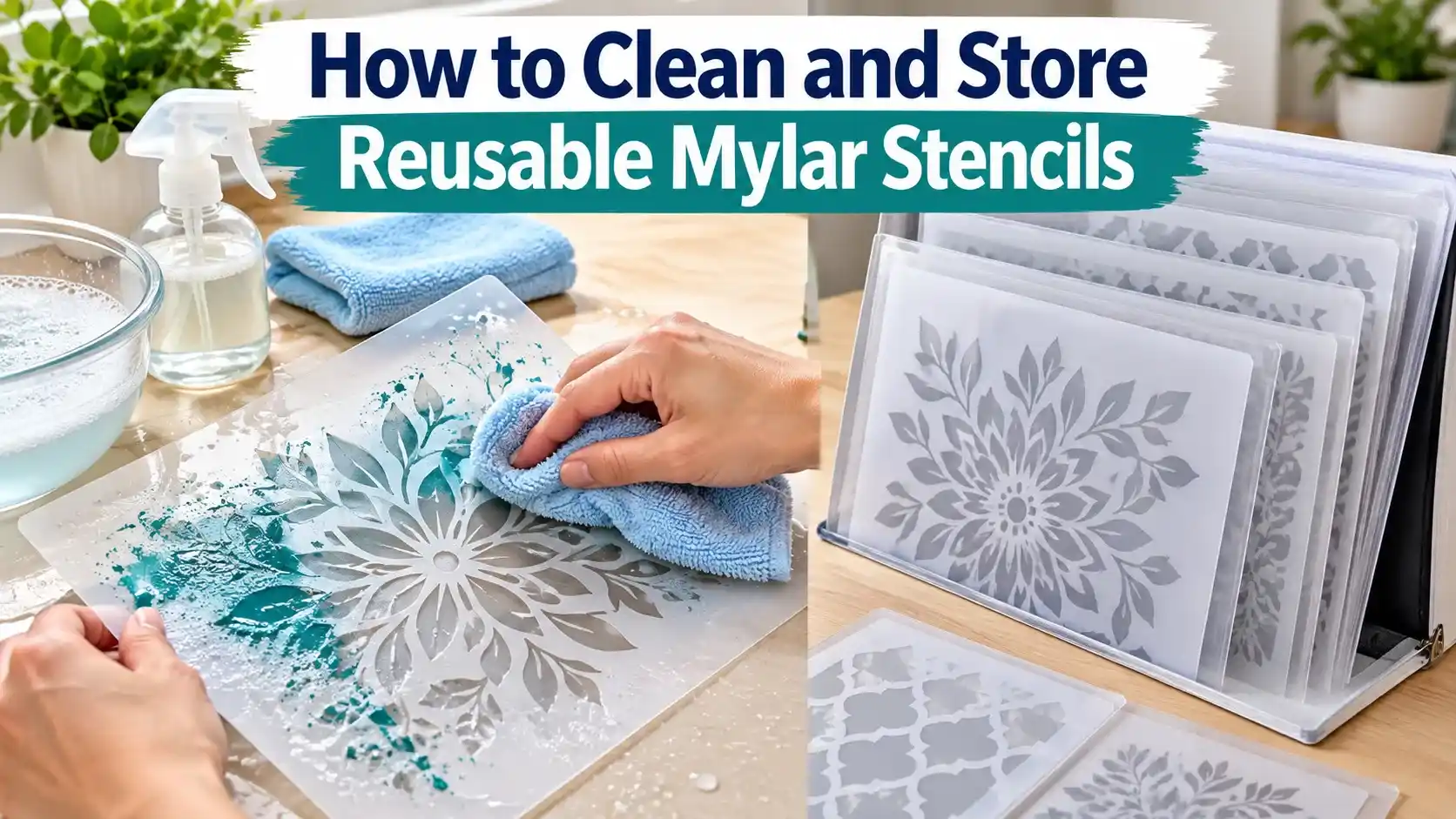
Learn how to clean reusable Mylar stencils safely, remove paint buildup, dry flat, and store them without warping or damage.
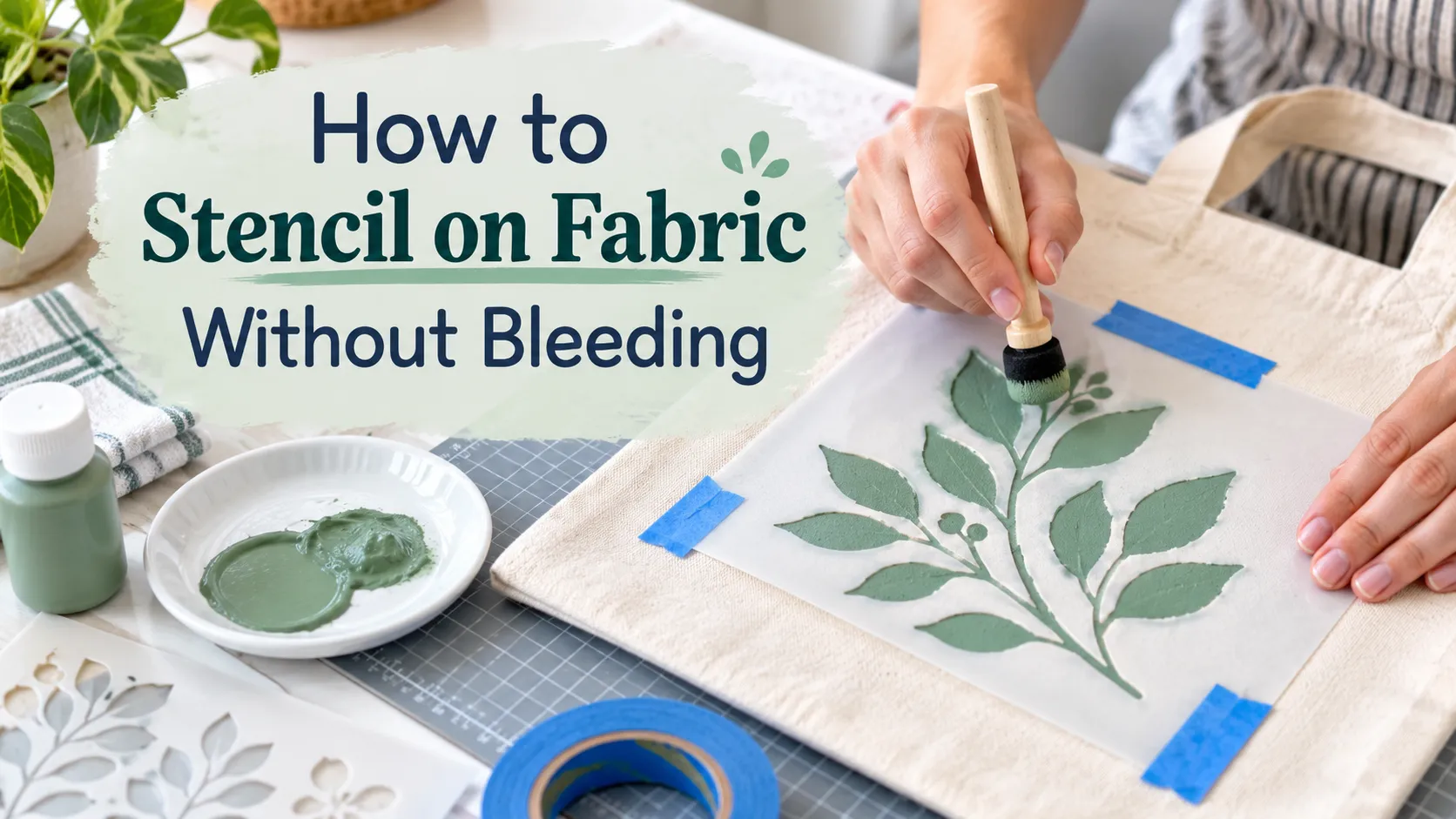
Learn how to stencil fabric without bleeding using secure placement, fabric paint, light coats, vertical application, careful lifting, and curing.
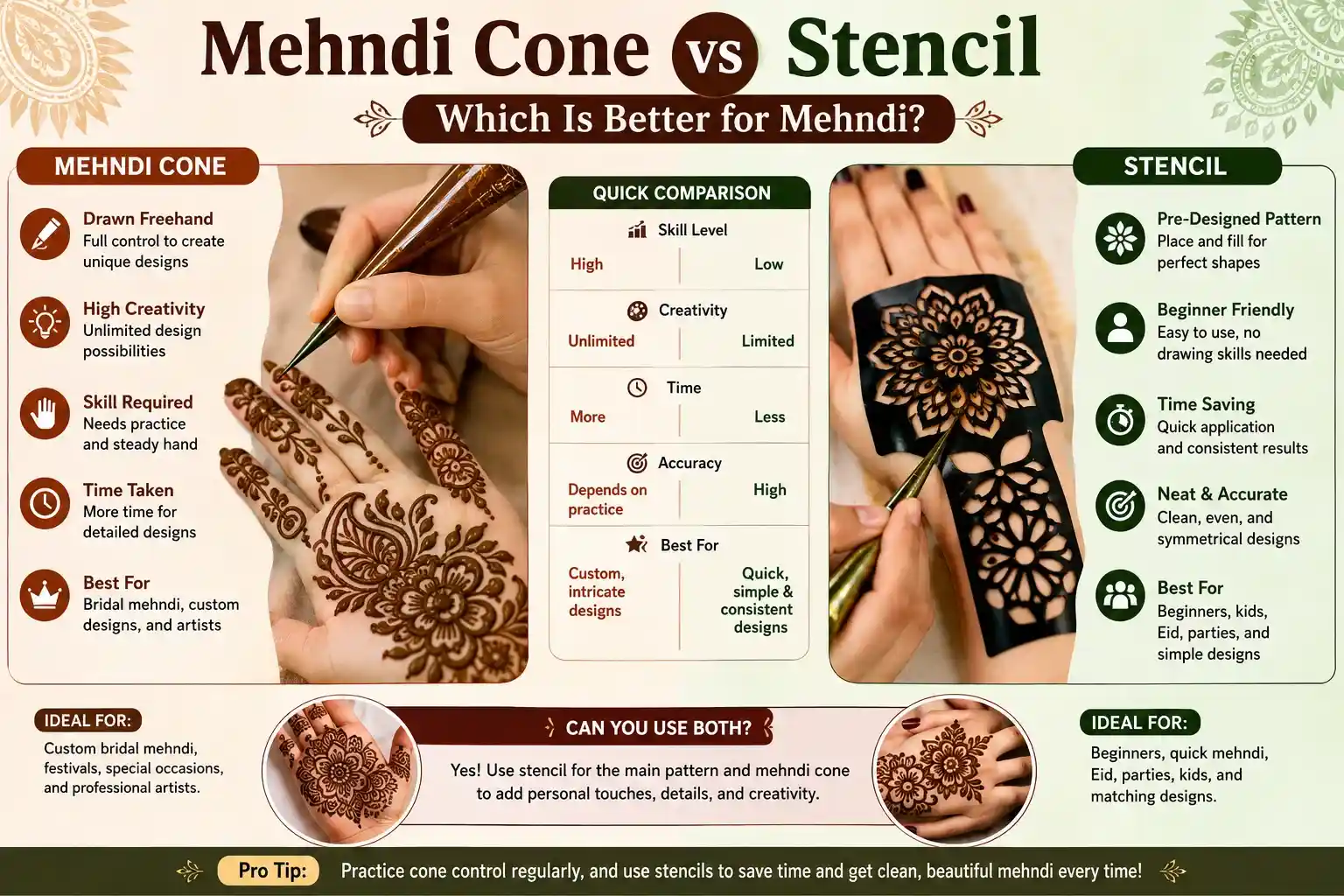
Choosing between a mehndi cone and a mehndi stencil can be confusing, especially when you want a beautiful design but do not have much practice with freehand mehndi. The two methods are not actually direct replacements for one another: a cone is the application tool, while a stencil is a pattern-guiding template. In many cases, … Read more
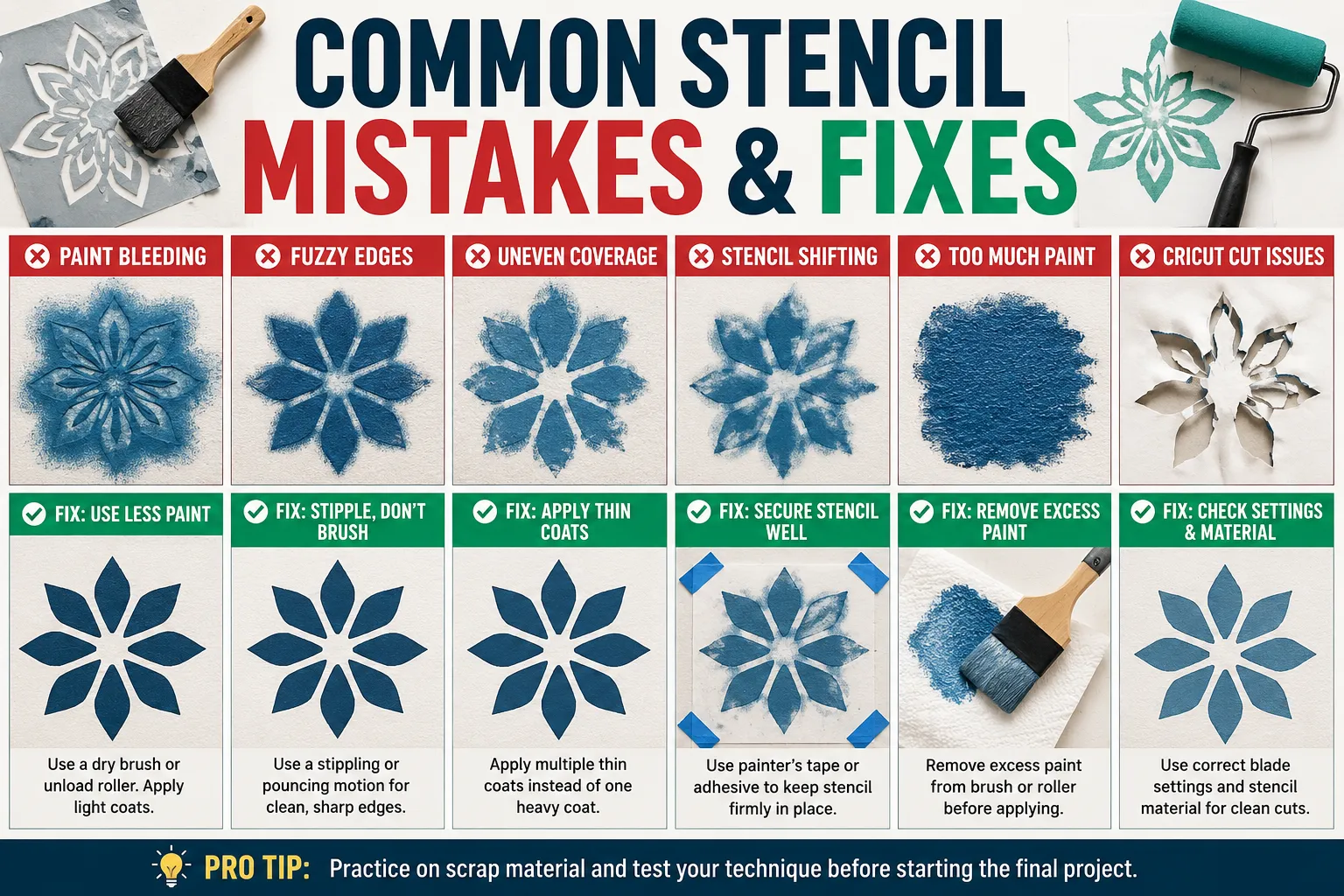
Introduction Stenciling looks simple: place the stencil, apply paint, lift it, and admire the design. In practice, small mistakes can create paint bleed, fuzzy edges, uneven coverage, shifted patterns, torn details, or damaged stencil material. The good news is that most stencil problems are technique problems rather than permanent failures. A stencil works by controlling … Read more