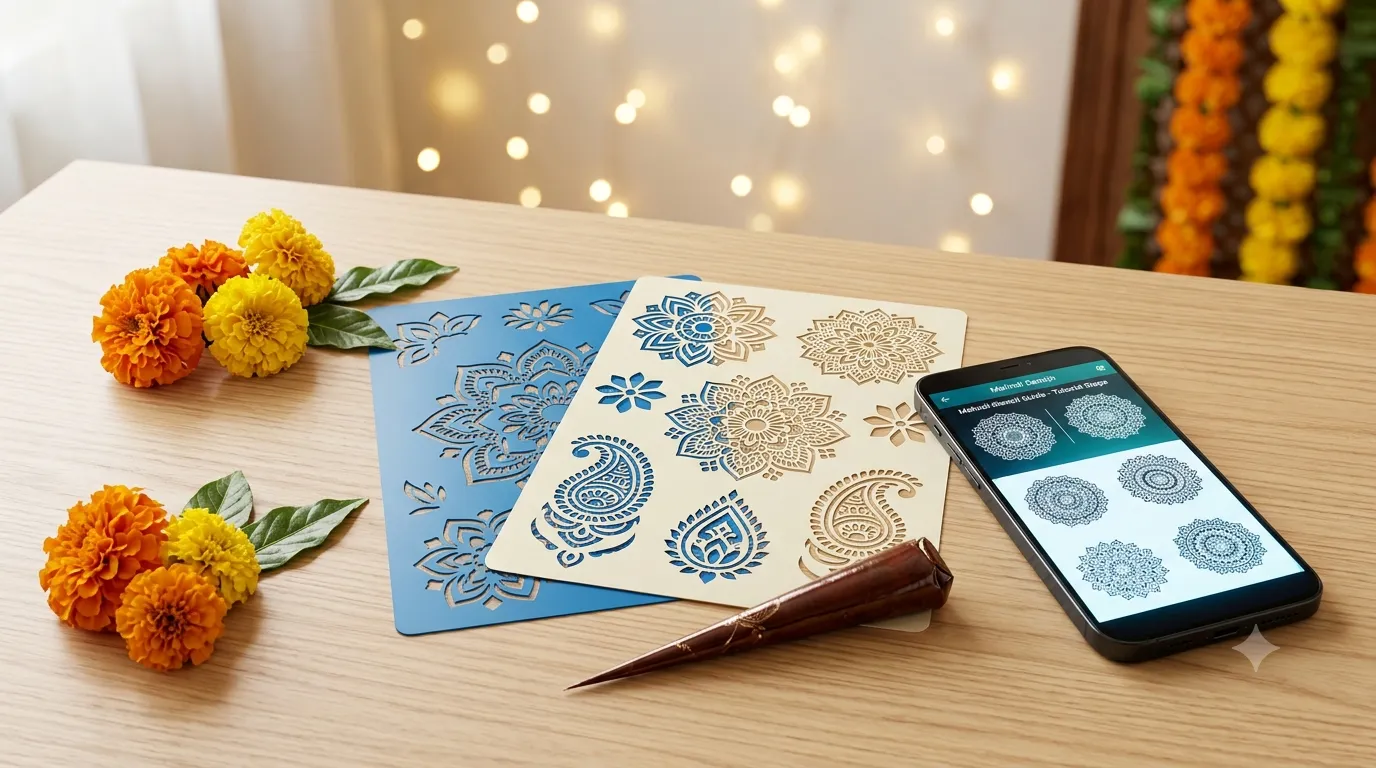
Mehndi and festive stencil designs are loved because they make traditional decoration easier, cleaner, and more beginner-friendly. Whether you are preparing for Eid, Diwali, Karva Chauth, Navratri, weddings, baby showers, school events, craft fairs, or family celebrations, stencils help create beautiful patterns without needing years of freehand practice.
This complete guide explains what mehndi stencils are, how festive stencil designs work, which styles suit different occasions, how to choose the right design, and how beginners can avoid common mistakes. If you are new to this topic, start here before exploring related guides like simple mehndi stencil designs for beginners and Arabic mehndi stencil designs.
What Are Mehndi and Festive Stencil Designs?
Mehndi stencil designs are pre-cut patterns used to apply henna or mehndi paste in a controlled shape. Instead of drawing every line by hand, you place a stencil on the skin, apply mehndi over the open areas, lift the stencil carefully, and let the design dry.
Festive stencil designs are broader. They can include mehndi-style patterns, rangoli-inspired shapes, mandalas, floral borders, diya motifs, crescent moons, stars, paisleys, peacocks, bells, leaves, and other celebration-themed artwork. These designs may be used on hands, feet, greeting cards, gift packaging, home décor, fabric, candles, walls, trays, wedding favors, and party decorations.
In simple words, mehndi stencils are mainly for body art, while festive stencils can be used for both body decoration and craft projects.
Why Are Mehndi Stencils So Popular?
Mehndi stencils are popular because they solve a real problem: many people love mehndi but do not feel confident drawing neat designs by hand. A stencil gives structure, symmetry, and speed.
The biggest benefits include:
- Clean patterns for beginners
- Faster application for events
- Repeatable designs for groups
- Less pressure during weddings or festivals
- Easy practice before learning freehand mehndi
- Better symmetry on both hands
- Useful designs for kids and quick festive looks
For example, if you need to apply mehndi to ten children during an Eid party or school celebration, stencils save time and keep the results consistent. For bridesmaids or family members, stencils help create matching patterns without requiring a professional artist for every person.
Types of Mehndi Stencil Designs
Mehndi stencil designs come in many styles. Choosing the right style depends on the occasion, hand placement, age group, and desired level of detail.
1. Simple Mehndi Stencil Designs
Simple designs are best for beginners, kids, and quick festive looks. These usually include flowers, small leaves, dots, vines, hearts, stars, and light wrist borders.
Use simple designs when:
- You are applying mehndi for the first time
- You need a quick design in 5–10 minutes
- The design is for kids
- You want a clean minimal look
- You are practicing stencil placement
Simple stencils are also useful for content creators who want quick mehndi design photos for social media, tutorials, or printable design collections.
2. Arabic Mehndi Stencil Designs
Arabic mehndi stencil designs are known for flowing lines, floral trails, leafy vines, open spaces, and diagonal layouts. They usually do not cover the entire hand, which makes them elegant and faster to apply.
Arabic-style stencils are perfect for Eid, engagement functions, family gatherings, and modern festive looks. They are especially useful for people who want beauty without heavy coverage.
3. Bridal Mehndi Stencil Designs
Bridal stencil designs are more detailed and often include paisleys, mandalas, flowers, peacocks, jaali patterns, initials, kalash motifs, bride-groom elements, and wrist-to-arm extensions.
Although bridal mehndi is often done freehand by professionals, stencils can still help with:
- Symmetrical mandalas
- Repeating borders
- Finger patterns
- Wrist cuffs
- Practice sheets
- Quick guest mehndi
- Bridesmaid matching designs
4. Mandala Mehndi Stencil Designs
Mandala designs are circular and balanced. They are ideal for the center of the palm, back of the hand, feet, or festive craft projects. Mandalas work well because they look complete even when the design is small.
A mandala stencil may include:
- Central circle
- Petal rings
- Dot borders
- Spiral details
- Sunburst shapes
- Geometric outlines
Beginners often prefer mandala stencils because placement is simple. Just center the stencil on the palm, press it flat, apply mehndi evenly, and lift slowly.
5. Floral Mehndi Stencil Designs
Floral stencils are evergreen because flowers suit almost every celebration. Rose, lotus, jasmine, sunflower, and abstract floral patterns can be used for hands, feet, wrist bands, greeting cards, fabric painting, and gift tags.
Floral designs are best for:
- Weddings
- Haldi ceremonies
- Eid
- Diwali parties
- Mother’s Day crafts
- Baby showers
- Girls’ festive events
A strong floral stencil should have clear gaps between petals. If the cuts are too thin, mehndi can smudge or merge.
6. Festive Motif Stencil Designs
Festive motif stencils are designed around specific events. These may include diyas for Diwali, crescents for Eid, dandiya sticks for Navratri, bells for puja décor, snowflakes for winter crafts, stars for New Year, or hearts for Valentine’s events. For crescent and lantern patterns, explore our Ramadan mehndi stencil ideas.
Popular festive stencil motifs include:
- Diya and flame patterns
- Crescent moon and stars
- Rangoli circles
- Lotus borders
- Peacock feathers
- Kalash and swastik-inspired traditional symbols
- Gift box and ribbon designs
- Fireworks and celebration icons
How to Choose the Right Mehndi Stencil Design
The best stencil is not always the most detailed one. A good stencil should match the user’s skill level, time, placement, and occasion.
Choose by Skill Level
Beginners should start with bold designs. Thin, crowded patterns look attractive online but are harder to apply neatly. Start with flowers, vines, dots, and mandalas before moving into bridal or full-hand designs.
Choose by Occasion
For weddings, choose detailed patterns with elegance and symmetry. Eid, Arabic trails, crescent moons, floral vines, and back-hand designs work beautifully. Diwali, diya, lotus, rangoli, and mandala patterns feel more festive. For kids, choose stars, hearts, flowers, butterflies, and small wrist bands.
Choose by Placement
Different areas need different designs:
- Palm: mandalas, tikki designs, floral circles
- Back hand: Arabic trails, ring-style patterns, bracelet designs
- Fingers: leafy lines, dots, mini florals
- Wrist: cuff designs, borders, bangles
- Feet: anklet patterns, floral corners, toe details
- Arms: long vines, bridal extensions, bold borders
A design that looks good on the palm may not work well on fingers. Always match the stencil shape to the body area.
Choose by Time Available
If you only have 10 minutes, use a simple Arabic trail or small mandala. If you have 30–60 minutes, you can use a more detailed full-hand stencil. For weddings, plan multiple sessions or combine stencil work with freehand finishing.
Step-by-Step: How to Use a Mehndi Stencil
Using a stencil looks simple, but small details affect the final result. Follow these steps for cleaner designs. For detailed placement and removal advice, see how to use mehndi stencils at home.
Step 1: Clean the Skin
Wash the skin with mild soap and dry it completely. Avoid lotion, oil, or sunscreen before applying mehndi because slippery skin can make the stencil move.
Step 2: Position the Stencil
Place the stencil flat on the hand, foot, or chosen surface. Make sure all edges touch the skin. If the stencil lifts in the middle, the design may blur.
Step 3: Secure the Stencil
For adhesive stencils, press gently from the center outward. For non-adhesive stencils, hold the corners firmly or use skin-safe tape around the edges. Do not stretch the skin too much.
Step 4: Apply Mehndi Paste
Apply a thin, even layer of mehndi paste over the stencil openings. Avoid pressing too hard. Too much paste can bleed under the stencil. For help choosing an application method, compare mehndi cones and stencils.
Step 5: Lift Slowly
Lift the stencil from one side in a slow motion. Do not pull upward suddenly. A slow peel keeps the lines sharp.
Step 6: Let It Dry Naturally
Allow the mehndi to dry without touching it. Drying time depends on paste thickness, room temperature, and humidity. Avoid using a hairdryer too close because strong air can crack or move wet paste.
Step 7: Protect the Design
Once the paste dries, avoid rubbing the area. Let the stain develop naturally. For body art, follow safe aftercare practices and avoid unknown chemical “black henna” products; the FDA warns that products marketed as black henna may contain added ingredients such as PPD and have been linked to skin reactions.
People Also Ask: Common Questions About Mehndi Stencils
Are mehndi stencils good for beginners?
Yes. Mehndi stencils are excellent for beginners because they reduce the need for freehand control. They help new users learn spacing, symmetry, and pattern placement. However, beginners should start with bold and simple designs rather than very thin bridal patterns.
Can mehndi stencils be reused?
Some stencils can be reused, depending on material and paste residue. Thin adhesive stencils may lose stickiness after one or two uses. Plastic or mylar-style stencils can often be cleaned and reused for craft projects, but body art stencils need proper hygiene. Before storing a reusable template, learn how to clean mehndi stencils.
Which mehndi stencil design is best for Eid?
Arabic trails, crescent moons, stars, floral vines, and back-hand bracelet styles are great for Eid. These designs look festive, elegant, and quick to apply before family gatherings or Eid prayers.
Which stencil design is best for Diwali?
Diya, lotus, rangoli, mandala, peacock, and floral border stencils work well for Diwali. These designs can be used not only for mehndi but also for greeting cards, gift boxes, candles, trays, and home décor.
Can kids use mehndi stencils?
Kids can use simple mehndi stencils under adult supervision. Choose small, bold patterns and avoid complex designs that require long drying time. Always use safe, skin-friendly products and avoid chemical dye mixtures.
Problem-Solution Guide
Problem: The stencil design looks smudged
Solution: Use less paste, press the stencil more firmly, and lift it slowly. Smudging usually happens when the stencil moves or paste is applied too thickly.
Problem: Fine details are not visible
Solution: Choose a stencil with wider cut lines. Very fine details may close up when paste spreads. Beginners should avoid overly delicate patterns.
Problem: The design looks uneven on both hands
Solution: Mark the center point before applying the stencil. Use mirror-image stencils for left and right hands when possible.
Problem: The mehndi paste goes under the stencil
Solution: Make sure the skin is dry, the stencil is flat, and the paste is not watery. Thick but smooth paste gives better control.
Problem: The design feels too plain
Solution: Add freehand dots, tiny leaves, finger lines, or wrist borders after removing the stencil. A simple stencil can look premium with small finishing touches.
Real-World Use Cases for Mehndi and Festive Stencils
Weddings
Use stencils for bridesmaids, family members, kids, and quick guest mehndi counters. Bridal artists can also use stencils for repeating borders, mandalas, and symmetrical details.
Eid Celebrations
For Eid, stencils are ideal because many people want quick and elegant designs the night before the celebration. Arabic and crescent-inspired designs perform especially well.
Diwali and Home Décor
Festive stencils can be used for diyas, rangoli boards, greeting cards, wall art, gift packaging, and table décor.
School and Craft Events
Teachers and craft organizers can use festive stencils for paper crafts, cultural activities, and celebration-themed art projects. Simple motifs work best for children.
Small Business Products
Digital stencil files, printable mehndi sheets, SVG designs, reusable stencils, and festival craft templates can be sold online. A strong design library can support Etsy shops, digital product stores, and craft businesses.
Common Mistakes to Avoid
Mistake 1: Choosing designs that are too complex
Many beginners choose bridal-level stencils first. This often leads to smudging and frustration. Start simple, then increase detail gradually.
Mistake 2: Applying too much paste
A thick layer does not always mean a better design. Too much paste can blur fine lines. Use a smooth, controlled layer.
Mistake 3: Removing the stencil too quickly
Fast removal can drag wet paste across the skin. Always lift slowly from one side.
Mistake 4: Ignoring placement
A beautiful design can look awkward if placed incorrectly. Center palm mandalas, align wrist borders, and position back-hand trails along the natural flow of the hand.
Mistake 5: Mixing too many styles
A mandala, Arabic trail, bridal jaali, and cartoon motif on one hand may look confusing. Choose one main style and support it with matching elements.
Mistake 6: Using unsafe products
Avoid unknown “instant black” products on skin. For body art, safety matters more than speed or color intensity.
Design Tips for Better Mehndi Stencil Results
A good stencil design should feel balanced. It should have enough detail to look attractive but enough open space to stay clean after application.
Use these design tips:
- Keep important shapes bold
- Use dots to fill empty areas
- Add borders around wrist and fingers
- Repeat small motifs for rhythm
- Leave breathing space between elements
- Match the design to the occasion
- Use symmetry for bridal and mandala looks
- Use diagonal flow for Arabic designs
- Use cultural motifs respectfully
For example, a Diwali stencil can combine a central diya with lotus petals and dotted rangoli borders. An Eid stencil can combine crescent moons, stars, and Arabic floral trails. A wedding stencil can combine paisleys, peacocks, mandalas, and bracelet-style wrist details.
Beginner-Friendly Mehndi Stencil Ideas
Good beginner topics include:
- Simple front-hand mehndi stencil design
- Easy back-hand mehndi stencil design
- Small mandala mehndi stencil
- Kids mehndi stencil design
- Arabic mehndi stencil for Eid
- Diwali diya stencil design
- Floral wrist mehndi stencil
- Bridal finger stencil pattern
- Minimal mehndi stencil for girls
- Full-hand festive stencil design
Final Thoughts
Mehndi and festive stencil designs make traditional decoration more accessible, especially for beginners, busy families, event organizers, and small craft businesses. The best designs are not just beautiful; they are practical, easy to apply, culturally relevant, and matched to the occasion.
If you are starting from zero, begin with simple mandalas, floral trails, wrist borders, and Arabic-style back-hand designs. Once you gain confidence, move into bridal patterns, full-hand layouts, and seasonal festive stencil collections.
10 thoughts on “Mehndi & Festive Stencil Designs Complete Guide”