Medical Disclaimer: The information in this article provides general educational guidance. It does not replace professional medical advice, diagnosis, or clinical treatment. Always consult a licensed healthcare provider regarding your specific health metrics before changing your diet or fitness routine.
Millions of people use a simple formula to check their health daily. You step on a scale. You measure your height. Then, you plug those numbers into an online tool. This basic BMI calculation for height and weight gives fast results. It instantly tells you your generalized health category. Insurance companies and doctors use this universal screening method everywhere.
However, a critical realization has emerged recently. Health is not universally standardized. The foundational math remains the same globally. But, different populations store fat very differently.
Imagine taking a “healthy” BMI result to a Tokyo clinic. The doctor might flag your chart for metabolic risks. Global metrics fail to account for genetic differences in fat distribution. Today, we will explore the science of body mass. We will explain why Japanese doctors use a different health scale. We will also show you how to measure your metrics precisely.
The Science: WHO Guidelines vs. JASSO Classifications
To understand regional BMI scales, we must look at the baseline. The World Health Organization (WHO) created the global standard. Researchers developed this scale using data primarily from Caucasian populations.
The WHO scale assumes something specific. It assumes severe weight-related illnesses only spike with massive excess weight. These illnesses include type 2 diabetes and heart disease.
Why East Asian Genetics Require a Different Scale
Medical researchers in East Asia noticed a major problem. Japanese people were developing metabolic syndromes at much lower body weights. The issue was not the total volume of fat. Instead, the problem was the specific location of that fat.
Asian populations have a genetic predisposition to store visceral fat. This fat wraps around vital organs like the liver. Visceral fat directly causes insulin resistance and systemic inflammation.
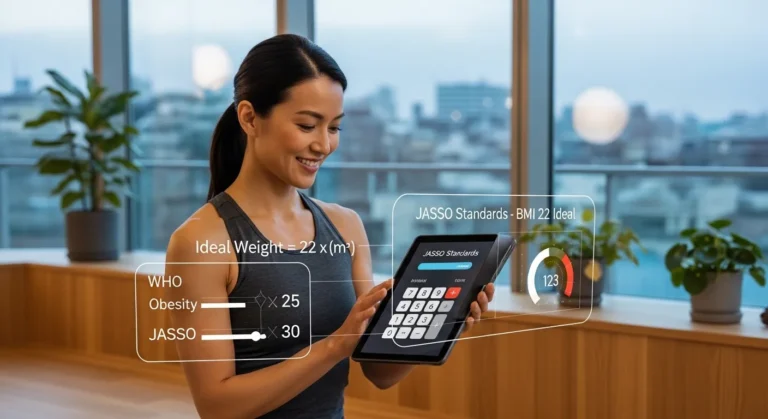
Therefore, the Japan Society for the Study of Obesity (JASSO) took action. They conducted exhaustive clinical research. They created a customized, stricter set of BMI criteria. This new scale accurately reflects the physiological reality of the Japanese population.
Here is a clear comparison of the two medical standards:
The Global WHO BMI Scale
- Underweight: Less than 18.5
- Normal Weight: 18.5 – 24.9
- fat: 25.0 – 29.9
- has: 30.0 and above
The Japanese (JASSO) BMI Scale
- Underweight: Less than 18.5
- Normal Weight: 18.5 – 24.9 (Note: A BMI of exactly 22.0 is the statistical ideal in Japan).
- Obesity Disease (Degree 1): 25.0 – 29.9
- Obesity Disease (Degree 2): 30.0 – 34.9
- Obesity Disease (Degree 3): 35.0 – 39.9
- Obesity Disease (Degree 4): 40.0 and above
The most vital data point is the threshold for obesity disease. Under global WHO guidelines, a BMI of 26 is merely “fat.” However, JASSO guidelines immediately classify a BMI of 25.0 or higher as obesity. This lower threshold helps doctors treat visceral-fat-related diseases much earlier.
How to Measure Your BMI Accurately at Home
A BMI calculation for height and weight requires highly accurate raw data. Many people use estimated heights or weigh themselves at the wrong time. This mistake leads to skewed results and unnecessary health anxiety.
You must standardize your measurement process. Follow this exact protocol for accurate numbers:
- Time it Right: Your body weight fluctuates constantly. Hydration and digestion change your numbers daily. Weigh yourself immediately after waking up. Do this right after using the restroom and before eating.
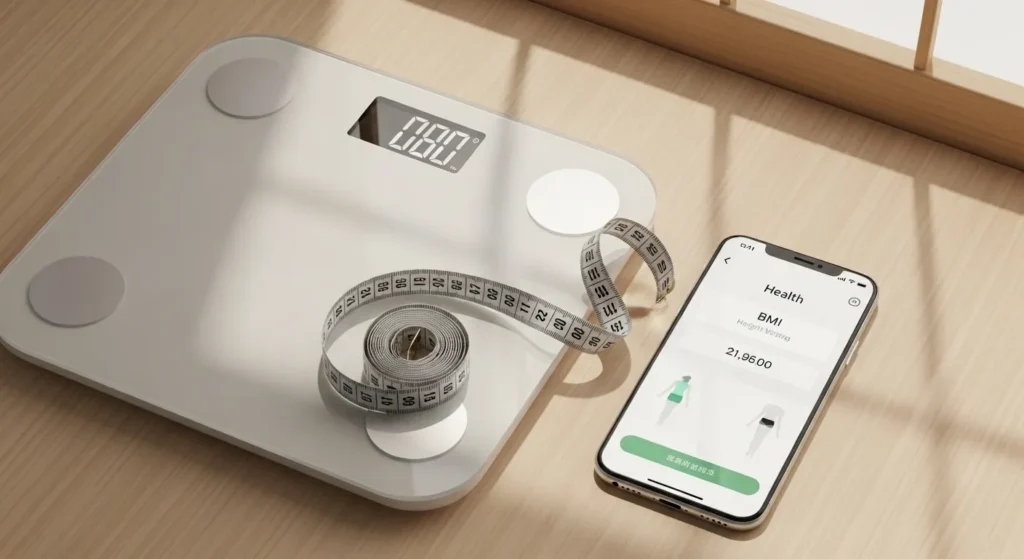
- Calibrate Your Equipment: Place your digital scale on a flat, hard surface. Tile or hardwood floors work best. Never place a scale on a carpet. Soft surfaces absorb pressure and give a false low reading.
- Minimize Clothing: Weigh yourself naked or in light underwear. Heavy jeans or thick sweaters add extra pounds. This extra weight instantly skews your BMI results.
- Measure Height Accurately: Do not guess your height. Stand barefoot against a flat wall. Your heels, shoulders, and head must touch the wall. Look straight ahead. Have a partner place a flat object on your head. Mark the wall and measure from the floor.
Tool Recommendation: A Smarter Way to Calculate
You need to process your data after measuring. The basic math divides your weight by your height squared. However, converting between imperial and metric units manually causes math errors.
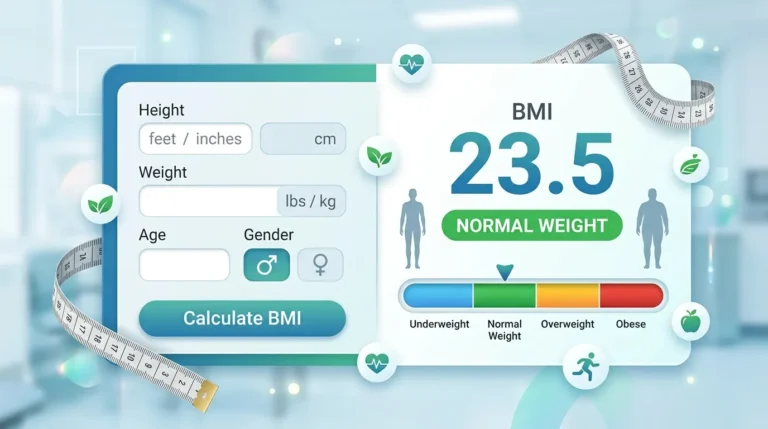
Furthermore, standard calculators evaluate your result using Western scales. This gives a false sense of security for certain demographics. For precise results, I recommend the DigitalOnDay Free Japanese BMI Calculator.
This digital utility processes your BMI calculation for height and weight using strict JASSO criteria. It categorizes your health based on the critical 25.0+ threshold recognized by Japanese endocrinologists.
Privacy and Speed Advantages
Beyond medical accuracy, the DigitalOnDay tool respects your privacy. Many corporate health apps force you to create accounts. They make you log in and surrender personal data.
Our tool operates entirely within your browser. It runs the complex math instantly on your own device. We never store, track, or sell your height and weight data. It is a completely free, fast, and secure utility.
The Limitations of BMI: What the Numbers Fail to Tell You
Using the JASSO scale is a phenomenal screening method. However, BMI remains an incomplete metric. It measures total body mass, but it ignores actual body composition.
You must factor in these biological realities when evaluating results:
- The Muscle Mass Paradox: Muscle tissue is denser and heavier than fat tissue. Athletes and weightlifters often register as having a high BMI. The mathematical formula cannot differentiate between healthy muscle and dangerous fat.
- Bone Density: The formula penalizes people with wide shoulders or thick bones. A larger skeletal frame naturally carries more baseline weight.
- The Reality of Aging: Humans lose muscle mass as they age. Fat replaces this lost muscle over time. An older person might have a normal BMI but a dangerously high body fat percentage.
- Pregnancy: BMI charts are entirely invalid for pregnant people. Total body weight during pregnancy includes the developing fetus, amniotic fluid, and increased blood volume.
A high BMI result should not cause immediate panic. Instead, use it as a prompt to seek further diagnostic testing. A doctor can perform a DEXA scan or check your waist-to-hip ratio for a clearer picture.
Frequently Asked Questions (FAQs)
Why is the Japanese BMI threshold significantly lower than the US standards?
The threshold is lower because of genetic differences in fat distribution. JASSO studies revealed that East Asian individuals experience a sharp increase in metabolic diseases at a BMI of 25.0. Caucasian populations typically do not face this spike until a BMI of 30.0.
If I am of Asian descent but live in a Western country, which scale should I use?
Endocrinologists recommend that individuals of East Asian descent refer to the stricter Asian guidelines. Genetics dictate fat storage patterns, not your current geography.
What is considered the ideal BMI in Japan?
Statistically, epidemiological research in Japan indicates that a BMI of exactly 22.0 is ideal. It associates with the absolute lowest incidence of weight-related diseases.
How often should I perform a BMI calculation for height and weight?
Checking your BMI once every three to six months is sufficient. Calculating your BMI daily leads to unnecessary psychological stress. Daily weight fluctuations are normal and rarely reflect true changes in body tissue.
Conclusion and Next Steps
Taking definitive control of your health begins with understanding your baseline metrics. However, relying on generalized global data can mask underlying physiological risks. By utilizing localized medical standards like the JASSO framework, you gain precise knowledge to make informed lifestyle choices.
Stop relying on generic calculators that fail to account for vital demographic nuances. Take two minutes today to visit the DigitalOnDay Free Japanese BMI Calculator. It is the fastest, most secure way to get your accurate baseline without compromising your personal data.
Final Medical Disclaimer: The Body Mass Index is a generalized screening tool, not a definitive diagnostic instrument. Always share your metrics with a licensed physician or a registered dietitian who can holistically evaluate your complete medical history.